
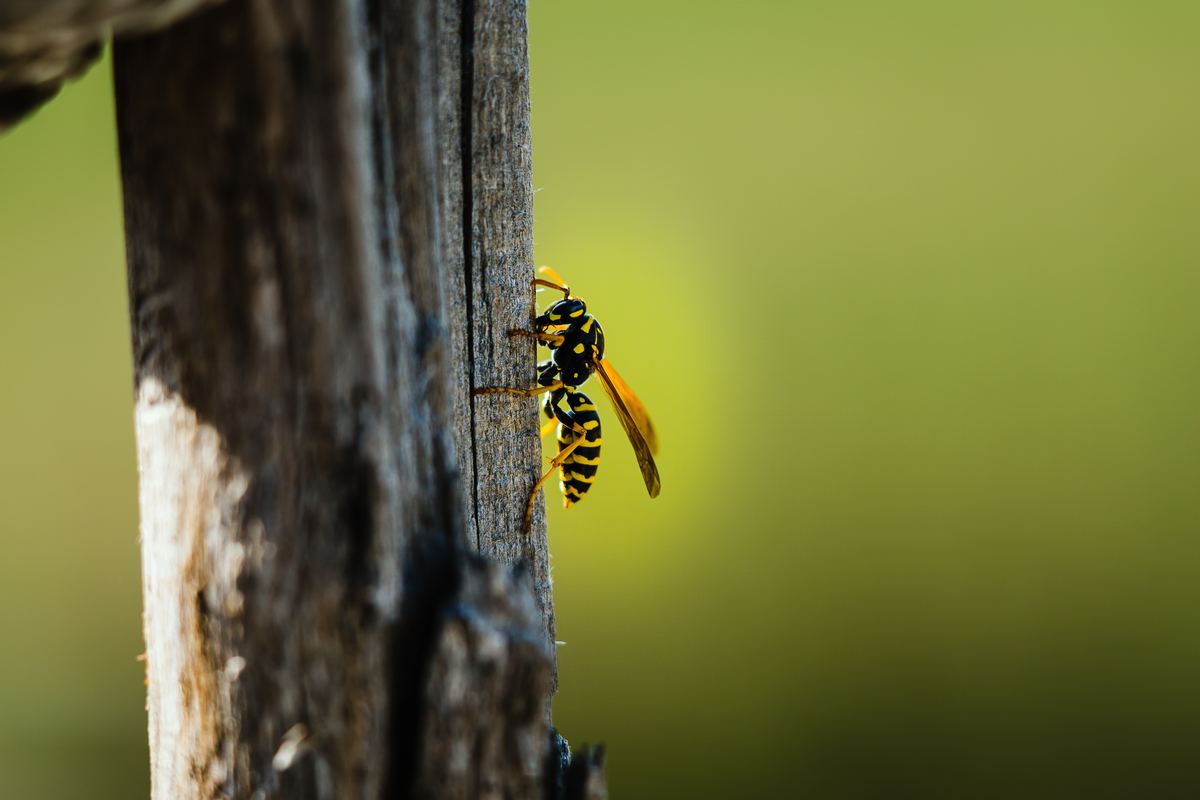
A wasp nest in your roof can be unsettling, particularly if someone in the house has an allergy. A calm, sensible first response keeps everyone safe and avoids making things worse.
Keep your distance
Never block the entrance, tap the nest or spray it. Wasps defend the colony quickly, and a disturbed nest can send out a large number of insects in seconds. Keep children and pets away and avoid the flight path.
Where nests commonly appear
- Loft spaces, eaves and soffits
- Wall cavities near air bricks
- Sheds, garages and other outbuildings
- Old burrows and holes in banks or lawns
- Dense hedges and mature trees
Check it really is a wasp nest
Wasps are slim and smooth with sharp yellow and black bands, and their nests look like grey paper. Honey bees and bumblebees are rounder and furrier and are important pollinators that need different handling. If you are unsure, take a photo from a safe distance and ask an expert.
Does every nest need treating?
Not always. A nest high in a tree away from doors and seating can often be left, as the colony dies off in winter. A nest in your loft, wall or near an entrance is a risk and is best treated early. You can learn why timing matters in our guide to the wasp year.
Why DIY treatment is risky
- A mature nest may hold thousands of wasps
- Working from a ladder while being stung can cause serious falls
- Shop-bought sprays often leave survivors that become more aggressive
- Stings near the mouth or throat, or allergic reactions, can become emergencies
If someone is stung
Move away calmly, wash the area with soap and water and use a cold compress. A pharmacist can recommend an antihistamine or cream. Call 999 straight away if there is difficulty breathing or swelling of the face, tongue or throat.
Get it sorted safely
Our technicians locate the nest, wear full protective gear and treat it with suitable products. See our wasp nest removal in Ascot or ask for a free quote.