
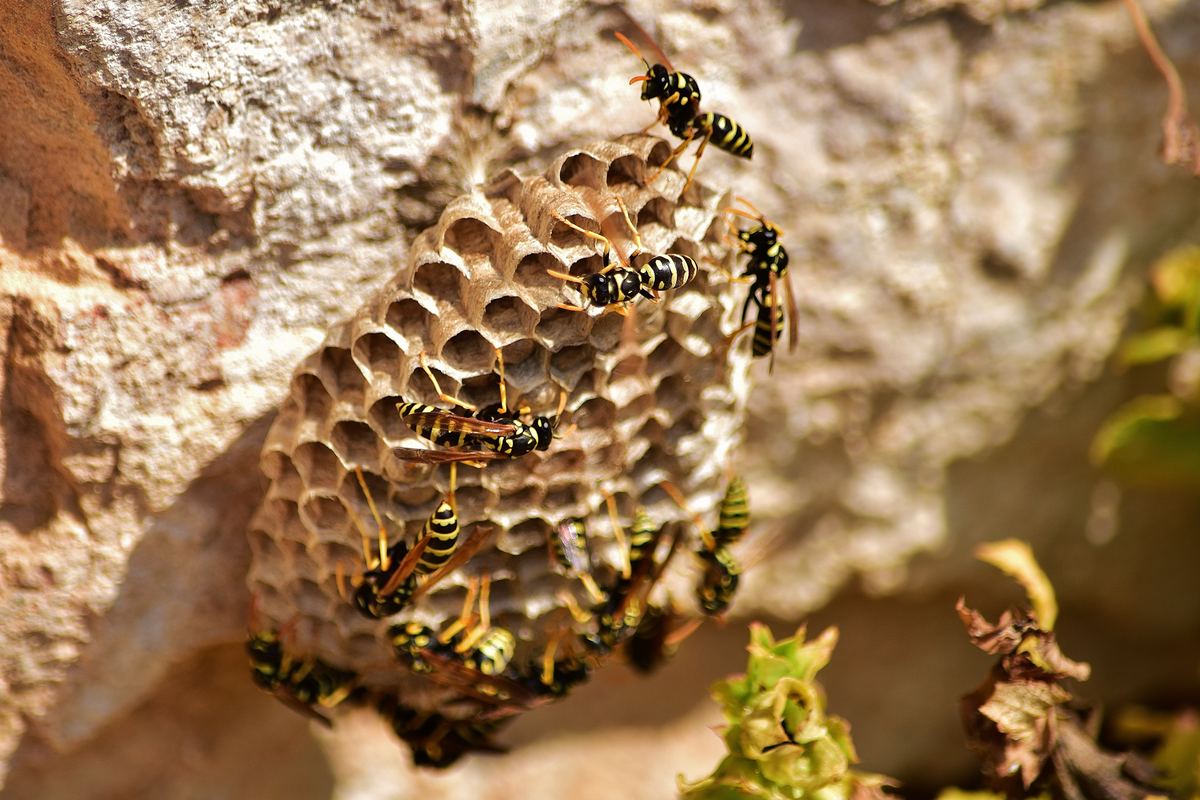
Every wasp that bothers you in late summer belongs to a colony that began with one insect many months earlier. Following that yearly cycle explains both their behaviour and the best time to act.
Spring: a single queen starts the nest
A mated queen wakes from hibernation as the weather warms and looks for a sheltered spot such as a loft, shed or hollow tree. She chews wood into pulp and builds a small paper nest, then lays the eggs that will become her first workers. Nests are not reused the following year.
Early summer: the workers take over
Once the first workers emerge, the queen stays in the nest and lays eggs while her daughters expand the home and gather food. They hunt caterpillars, flies and other insects for the grubs, which makes wasps useful in the garden at this stage. It is also when a nest is smallest and easiest to deal with.
Late summer: big numbers and a sweet tooth
By August a nest can hold thousands of wasps. The queen begins producing new queens and males, and the grubs stop giving off the sugary liquid that the workers rely on. The workers then search for sweet food elsewhere, which is why they swarm around drinks, fruit and ice cream and seem short tempered.
Autumn and winter: the colony fades
New queens mate and fly off to hibernate, while the old queen, the males and the workers die as the cold arrives. Only the young queens survive the winter, tucked away in log piles, wall cracks and lofts.
What this means for you
- Check lofts, sheds and garages in spring for small young nests
- Seal gaps along the roofline before queens settle
- Treat a nest early rather than waiting until late summer
- Cover sweet food and drink outdoors from July
- Ignore last year's empty nest, as it will not be reused
If you find an active nest, read our safe action plan for wasps in the roof or contact our wasp control team in Ascot.