
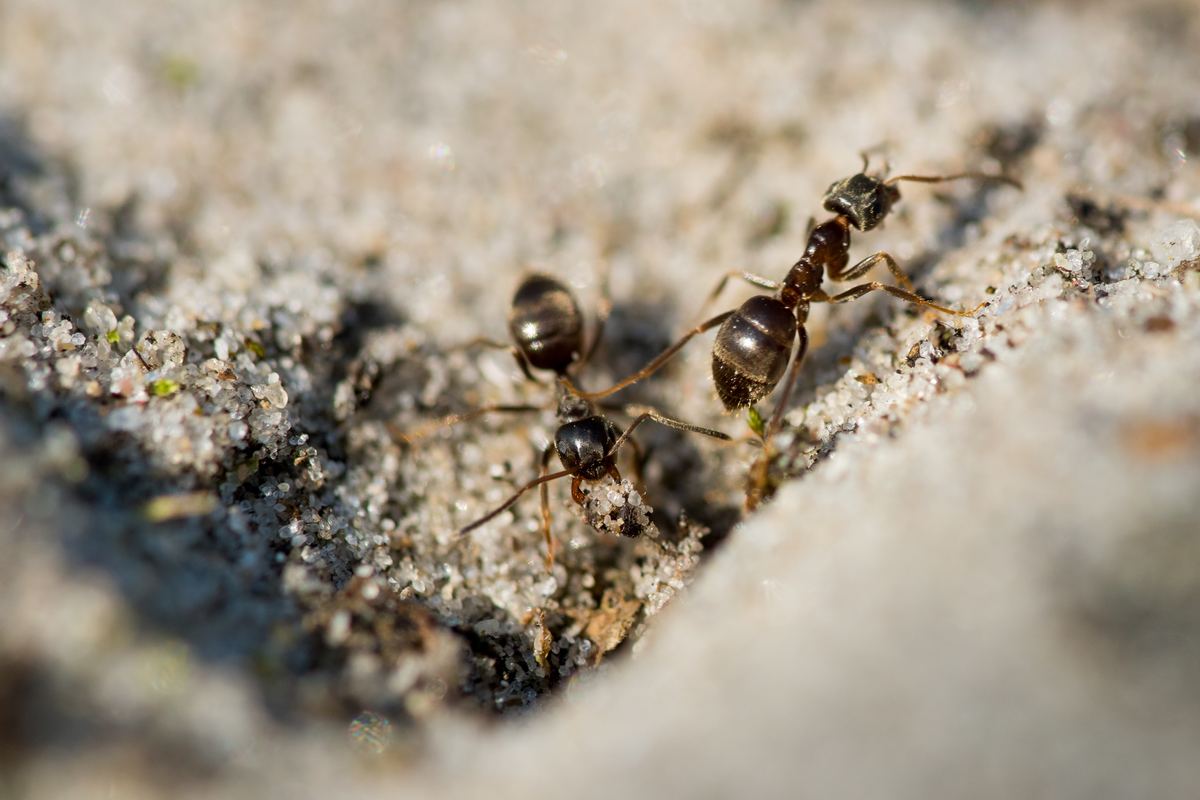
Ants are neat, organised and very persistent. A tidy line of them across your kitchen is no accident, and the clues in that trail are the key to getting rid of them.
How ants find your kitchen
Scout ants wander out looking for food. When one finds a crumb, a drop of juice or a bowl of pet food, it returns to the nest laying a scent trail. Other ants follow it, and soon a steady stream of workers is heading for your cupboards.
The ants you are most likely to see
- Black garden ants, the most common visitor, nesting under paving, lawns and walls
- Flying ants, the winged males and queens that leave the nest on warm summer days to mate
- Pharaoh ants, tiny and golden, which live inside heated buildings and are harder to control
Step 1: Trace the trail
Watch where the ants come in and where they head. Entry points are usually small gaps around windows, doors, pipes or cracks in brickwork. That shows you where to seal and where to place bait.
Step 2: Wipe away the scent
Clean the route with warm soapy water or a diluted white vinegar solution. This removes the chemical trail so newcomers lose their way.
Step 3: Remove the food
- Keep sugar, honey, cereal and sweet snacks in lidded tubs
- Wipe up spills straight away
- Rinse jam jars and juice bottles before recycling
- Lift pet bowls once your animal has finished
- Take the kitchen rubbish out daily
Step 4: Use bait, not only spray
Sprays kill only the foragers you can see, while the nest keeps producing more. Slow-acting bait works differently, because foragers carry it home and share it, so the queen and grubs get a dose too. Put stations beside the trail and keep them away from children and pets.
Step 5: Seal the gaps
Once activity stops, close cracks around windows, door frames and pipes with a suitable sealant so new scouts cannot get in.
When to call a professional
Get help if ants keep returning, you see several trails, they nest in a wall or cavity or you suspect pharaoh ants. Our technicians find the nest, treat it and advise on prevention. See our ant control in Ascot, or read about cockroaches in the kitchen.